
Growing older is a beautiful journey filled with wisdom, experiences, and cherished memories. However, it also brings unique challenges, including structural changes to daily routines, health concerns, and a heightened need for emotional and social support. As modern families become increasingly nuclear and children move to different cities for education and career opportunities, many senior citizens find themselves living in relative isolation.
This shifting social landscape highlights the critical importance of community living for elderly people. A well-planned neighborhood offers seniors much more than just a place to stay—it provides companionship, safety, swift healthcare access, recreational activities, and a profound sense of belonging.
Today, modern residential developments are shifting their focus toward creating integrated townships where multiple generations can thrive together. Whether families are browsing residential land for sale to build a future-proof home or actively evaluating a property for sale Ludhiana, choosing a community-centric environment has become a foundational consideration for the long-term well-being of elderly family members.
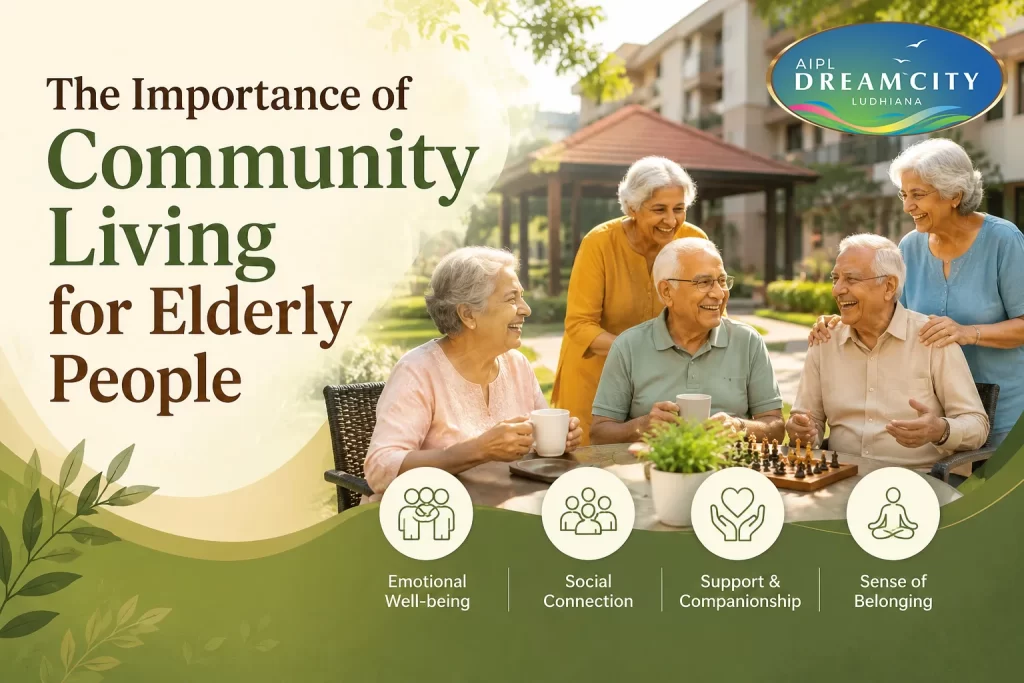
Table of Contents
- Introduction
- Comparative Value: Isolated vs. Community Living
- Why Social Connections Matter in Old Age
- Health and Wellness Benefits
- Enhanced Safety and Gated Security
- Intergenerational Bonding
- Why Modern Homebuyers Favor Community-Centric Developments
- Conclusion
- FAQs
Comparative Value: Isolated vs. Community Living
To understand why modern homebuyers are shifting their priorities, it helps to look at how daily life changes for a senior citizen moving from an isolated standalone home to an integrated community:
| Aspect | Isolated Standalone Housing | Integrated Community Living |
| Social Life | Dependent on family visits; high risk of daily isolation. | Built-in social calendar, clubs, and daily peer interactions. |
| Emergency Response | Reliant on external emergency services or distant relatives. | On-site security, panic buttons, and immediate neighbor support. |
| Physical Health | Limited local mobility; traffic-heavy urban walking conditions. | Dedicated, vehicle-free walking tracks, parks, and yoga zones. |
| Daily Convenience | Long commutes for basic groceries, medical checkups, and errands. | On-campus convenience stores, clinics, and pharmacies. |
Why Social Connections Matter in Old Age
Reducing Loneliness and Isolation
Loneliness is one of the most significant, yet underreported, challenges faced by elderly individuals. Public health research consistently shows that prolonged isolation can be as damaging to health as smoking, significantly increasing the risks of depression, anxiety, and cognitive decline.
Integrated neighborhoods allow seniors to:
- Meet like-minded peers with shared life experiences.
- Build organic, long-term friendships outside the immediate family.
- Participate in organized group activities like festival celebrations, card games, or book clubs.
- Maintain a consistent emotional support structure.
Creating a Clear Sense of Belonging
As people age, emotional comfort and meaningful relationships become central to daily happiness. A connected community creates an environment where seniors feel valued, safe, and included, effectively eliminating the feelings of neglect that often stem from living alone in busy urban environments.
Health and Wellness Benefits
Encouraging an Active Lifestyle
Physical activity is crucial for healthy aging. Modern residential communities intentionally design their common spaces to make movement safe and accessible, incorporating:
- Paved, well-lit walking tracks free of vehicular traffic.
- Manicured parks, green areas, and reflexive gardens.
- Dedicated spaces for morning yoga, meditation, and light aerobics.
- Equipped clubhouses and senior-friendly fitness spaces.
Immediate Access to Healthcare
Many modern residential developments place healthcare at the center of their master plans. When looking for a home, proximity to hospitals, regular on-site medical camps, and rapid emergency service access offer unparalleled peace of mind to both seniors and their far-away children.
Enhanced Safety and Gated Security
Security is arguably the primary concern for senior citizens living independently.
According to urban safety data, gated communities reduce emergency response times by up to 60% compared to traditional, unmanaged residential plots due to on-site security forces and centralized monitoring systems.
24/7 Peace of Mind
Modern integrated townships provide multi-layered security infrastructure, including:
- Controlled entry and exit points with digital visitor verification.
- Constant CCTV surveillance across public squares and perimeter walls.
- Well-maintained, obstacle-free footpaths reducing the risk of accidental slips and falls.
Intergenerational Bonding
One of the most profound advantages of integrated community living is the opportunity for different generations to interact naturally. True community living isn’t about segregating seniors into isolated retirement enclaves; it is about connecting them to a vibrant, multi-generational environment.
In these settings, older adults can naturally spend time around children, share life lessons, and participate in lively community events. This intergenerational continuity provides older individuals with a renewed sense of purpose while anchoring younger generations with stability, cultural wisdom, and mentorship.
Why Modern Homebuyers Favor Community-Centric Developments
Today’s real estate market reflects a massive shift in consumer psychology. Buyers are no longer just looking at square footage; they are investing in long-term lifestyles and family health.
When searching for premium residential land for sale, families increasingly bypass isolated urban pockets in favor of master-planned developments that guarantee open green spaces, robust security, and shared social infrastructure. Similarly, individuals looking for a sustainable property for sale Ludhiana are zeroing in on integrated townships. They realize that choosing an age-friendly development ensures that their parents can age with dignity, enjoy vibrant social circles, and live an independent life—all while remaining close to their loved ones.
Conclusion
Community living is far more than a modern real estate trend—it is a practical framework for improving the quality of life for senior citizens. It successfully tackles the hidden epidemics of aging: isolation, vulnerability, and lack of immediate medical support.
As you explore options for a residential land for sale or evaluate an upcoming property for sale Ludhiana, prioritize environments that emphasize shared community infrastructure. Investing in a community-oriented development is one of the most loving and valuable decisions a family can make, ensuring that elder family members can live out their golden years with security, purpose, and joy.