

Looking to invest in a commercial property? Whether you’re planning to open your own business, earn rental income, or build long-term wealth, buying commercial real estate is a significant financial decision. Unlike residential properties, commercial investments require careful evaluation of location, legal compliance, infrastructure, market demand, and future growth potential.
Choosing the right commercial property for sale can offer excellent returns, but only if you understand the key factors before making your purchase. This guide covers everything you need to know – from selecting the right location to verifying legal documents—so you can make a confident and informed investment.
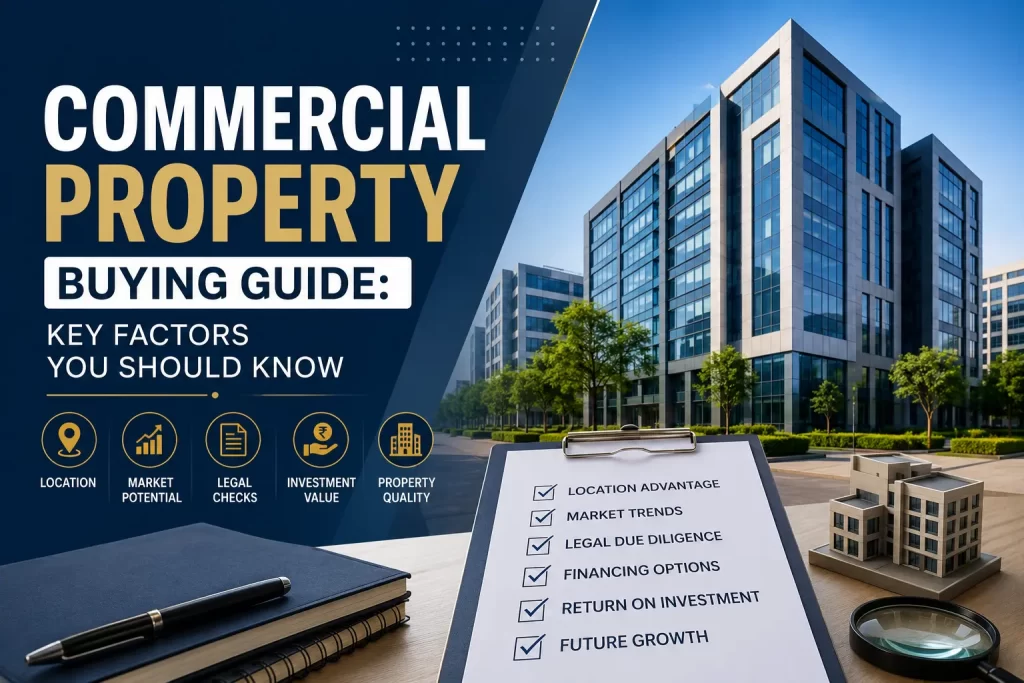
Table of Contents
- Why Invest in Commercial Property?
- What is Commercial Property?
- Key Factors to Consider Before Buying Commercial Property
- Mistakes to Avoid While Buying Commercial Property
- Benefits of Investing in Commercial Real Estate
- Conclusion
- FAQs
Why Invest in Commercial Property?
Commercial real estate has become one of the most attractive investment options in recent years. As businesses expand and cities continue to develop, the demand for quality commercial spaces keeps increasing.
Investing in a commercial property for sale offers several advantages:
- Higher rental income than residential properties.
- Long-term appreciation in property value.
- Stable cash flow through business tenants.
- Better lease agreements with longer durations.
- Opportunity to diversify your investment portfolio.
For investors seeking both capital appreciation and recurring income, commercial real estate is often a smart long-term choice.
What is Commercial Property?
Commercial property refers to real estate used for business or income-generating purposes. It includes:
- Office spaces
- Retail shops
- SCOs (Shop-Cum-Offices)
- Shopping complexes
- Warehouses
- Industrial buildings
- Business parks
- Commercial land for sale for future development
Depending on your investment goals, each property type offers different benefits and returns.
Key Factors to Consider Before Buying Commercial Property
1. Choose the Right Location
Location is one of the most important factors when purchasing commercial real estate.
A prime location attracts businesses, customers, and higher rental demand. Properties situated in rapidly developing areas often experience better appreciation over time.
Look for locations that offer:
- Easy road connectivity
- High footfall
- Nearby residential communities
- Business hubs
- Public transportation
- Future infrastructure projects
Businesses always prefer locations that are convenient for both customers and employees.
2. Define Your Investment Purpose
Before selecting a commercial property for sale, identify your investment objective.
Ask yourself:
- Are you planning to start your own business?
- Do you want regular rental income?
- Are you investing for long-term appreciation?
- Will you resell the property after a few years?
Your purpose determines the type, size, and location of the property you should purchase.
For example:
If you want rental income:
- Retail shops
- Office spaces
- SCOs
If you want future appreciation:
- Commercial land for sale
- Developing commercial zones
3. Verify Legal Documents Carefully
Legal verification is essential before making any investment.
Ensure the property has:
- Clear ownership title
- Government approvals
- Completion or occupancy certificate (if applicable)
- Building approvals
- No pending legal disputes
- Proper zoning permissions
Always consult a legal expert before signing any agreement.
Skipping legal verification can lead to expensive problems later.
4. Check Infrastructure and Connectivity
Modern businesses require excellent infrastructure.
Evaluate whether the property offers:
- Wide roads
- Parking facilities
- Reliable electricity
- Water supply
- Internet connectivity
- Security systems
- Fire safety measures
Properties with better infrastructure generally attract premium tenants and command higher rental rates.
5. Study Market Demand
Understanding the local commercial market is crucial.
Research:
- Vacancy rates
- Rental prices
- Competing commercial projects
- Business growth in the area
- Consumer footfall
If demand is strong, your investment is more likely to generate consistent returns.
A commercial project with high occupancy often indicates a healthy market.
6. Evaluate Future Growth Potential
Don’t just look at the property’s current value.
Consider the area’s future development plans, such as:
- New highways
- Metro connectivity
- IT parks
- Residential townships
- Educational institutions
- Hospitals
- Shopping destinations
Future infrastructure often increases both property value and rental demand.
Buying early in a developing location can significantly improve long-term returns.
7. Set a Realistic Budget
Commercial properties involve more than just the purchase price.
Include additional expenses like:
- Registration charges
- Stamp duty
- GST (where applicable)
- Maintenance charges
- Interior fit-outs
- Brokerage fees
- Legal expenses
Having a complete financial plan prevents unexpected costs later.
8. Explore Financing Options
Many banks and financial institutions offer commercial property loans.
Before applying:
- Compare interest rates.
- Check repayment tenure.
- Understand processing fees.
- Review EMI affordability.
A manageable loan structure helps maintain healthy cash flow from your investment.
9. Check the Builder’s Reputation
Buying from a trusted developer reduces investment risk.
Research:
- Previous commercial projects
- Construction quality
- Delivery timelines
- Customer reviews
- Legal compliance
- After-sales support
Established developers generally provide greater transparency and reliability.
10. Understand Rental Yield and Return on Investment (ROI)
One of the biggest reasons investors choose commercial property for sale is higher rental returns.
Calculate:
Rental Yield
Annual Rental Income ÷ Property Price × 100
Capital Appreciation
Estimate how much the property’s value could increase over the next 5–10 years.
The best commercial investments generate both rental income and long-term appreciation.
11. Assess Parking and Accessibility
Parking is often overlooked but plays a vital role in commercial success.
Adequate parking benefits:
- Customers
- Employees
- Business owners
- Delivery services
Poor parking can negatively impact business performance, especially for retail establishments.
12. Consider Buying Commercial Land
Sometimes purchasing commercial land for sale offers better flexibility than buying a ready-built property.
Advantages include:
- Lower initial maintenance
- Freedom to develop according to market demand
- Better appreciation potential
- Suitable for future commercial projects
However, ensure the land is legally approved for commercial use before purchasing.
Mistakes to Avoid While Buying Commercial Property
Many investors make costly mistakes due to inadequate research.
Avoid these common errors:
Ignoring location quality
A cheaper property in a poor location may struggle to attract tenants.
Not checking legal approvals
Never invest without verifying ownership and approvals.
Underestimating maintenance costs
Commercial buildings often have higher maintenance expenses.
Focusing only on price
A lower purchase price doesn’t always mean better value.
Ignoring future development
Growth potential plays a major role in long-term returns.
Buying without market research
Always analyze rental demand before making a decision.
Benefits of Investing in Commercial Real Estate
Commercial property continues to attract investors because of its long-term financial advantages.
Some major benefits include:
Higher Rental Income
Commercial spaces generally generate better rental returns than residential properties.
Long-Term Leases
Businesses often sign leases lasting several years, providing stable income.
Property Appreciation
Commercial real estate in developing areas tends to appreciate significantly over time.
Portfolio Diversification
Commercial investments reduce dependence on traditional investment options.
Better Inflation Protection
Rental rates often increase over time, helping investors maintain purchasing power during inflation.
How to Choose the Best Commercial Property
Before finalizing any investment, ask yourself:
- Is the location growing?
- Is the property legally approved?
- Does it offer good connectivity?
- Will businesses want this location?
- Is parking sufficient?
- Is rental demand high?
- Is the developer trustworthy?
- Does the property fit your investment goals?
Answering these questions can help you make a more informed and confident purchase.
Conclusion
Buying commercial real estate is more than just purchasing a property—it’s an investment in long-term financial growth. By carefully evaluating location, legal compliance, infrastructure, market demand, and future development, you can significantly improve your chances of making a profitable investment.
Whether you’re exploring a commercial property for sale for immediate business use or considering commercial land for sale for future development, thorough research and smart planning are essential. Focus on properties with strong growth potential, reliable infrastructure, and clear legal documentation to maximize returns.
With the right approach, commercial real estate can provide steady rental income, long-term appreciation, and a valuable addition to your investment portfolio.
FAQs
Yes. Commercial properties often provide higher rental income, longer lease terms, and strong long-term appreciation, making them an attractive investment option.
Verify legal documents, assess the location, evaluate infrastructure, understand market demand, review the builder’s reputation, and calculate expected rental returns.
It depends on your investment objective. Commercial land for sale offers greater flexibility and appreciation potential, while ready-built commercial properties can generate rental income immediately.
You should calculate the expected rental yield, estimate future appreciation, consider occupancy levels, and account for all ownership costs to determine the overall return on investment.
A strategic location with strong connectivity, high visibility, and growing business activity attracts more tenants and customers, leading to better rental income and higher property value over time.